Practice
Pregnancy & Postnatal Yoga
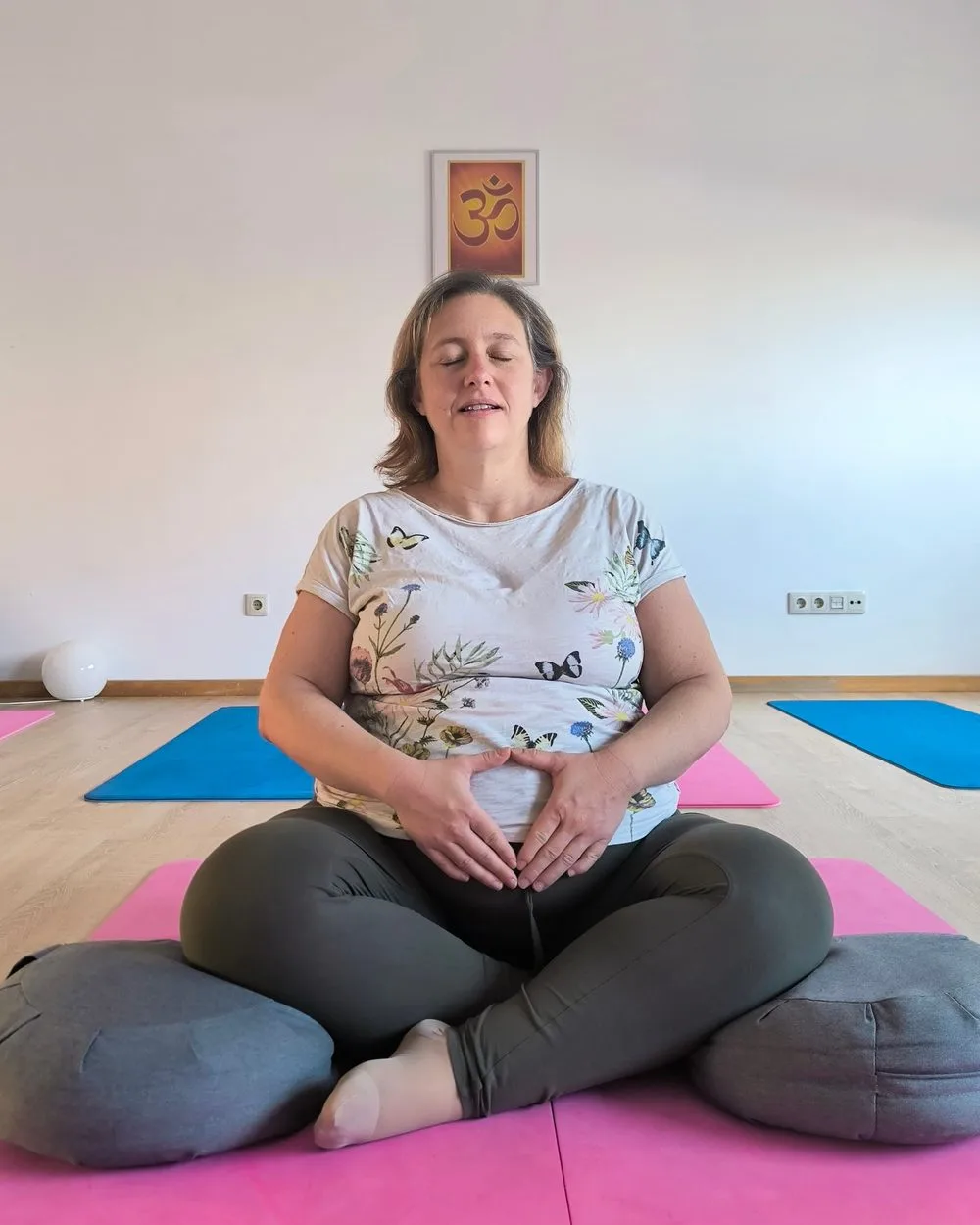
Pregnancy changes everything — your body, your sleep, your breathing, the way you look at yourself. Yoga walks with you on this great journey into new life.
⚠️ NOTICE: Yoga is a complement, not a treatment. Always consult your doctor before any practice during pregnancy. Tell your teacher about any medical condition. Seek emergency care if you experience: bleeding, severe pain, dizziness, or any alarming symptom.
Recovery & Postpartum — Your Whole Life Enters a New Phase
The postpartum period is one of the most incredible and challenging phases in a woman's life. The focus naturally shifts to the new baby.
How can a yoga practice fit into this phase — so incredible and challenging, yet also so often over-romanticised?
After a vaginal birth, 6 to 8 weeks of recovery are needed. After a caesarean, recovery can extend to 8-12 weeks. During this time the body changes drastically. Muscles and organs are returning to their position, joints are stabilising, and the hormonal system is settling. Prolactin (responsible for milk production) is elevated, which also affects emotional states.
This great new love that is a son or daughter also brings new anxieties and doubts. Relationships as a couple also go through major changes, requiring adjustment to this new reality.
How to Approach Sādhanā — Your Yoga Practice
Weeks 1-6: No Mat Yoga
This is a phase of deep rest, but also extra vulnerability. Respect this.
Typical progression: month 3 (Āsanas held longer), months 4-5 (gentle inversions return), month 6+ (normal practice — or a new "normal").
Important note: you often come out stronger than before. Because you practised with intention. Because you know your body differently now. Because the vulnerability of pregnancy taught a humility that is itself strength.
What Our Pregnant Students Say
«During such an important phase of adaptation, the team was always close to me, with an attitude of support, protection and guidance before, during and after pregnancy. With adapted, well-directed and thoughtful Āsanas, I stayed active and healthy: physically, emotionally and spiritually. I felt part of a village ready to welcome me and my family!»
Full Practice Sequence (15-20 minutes daily — 3rd trimester)
Pawa Muktāsana — Mobilisation (3 minutes)
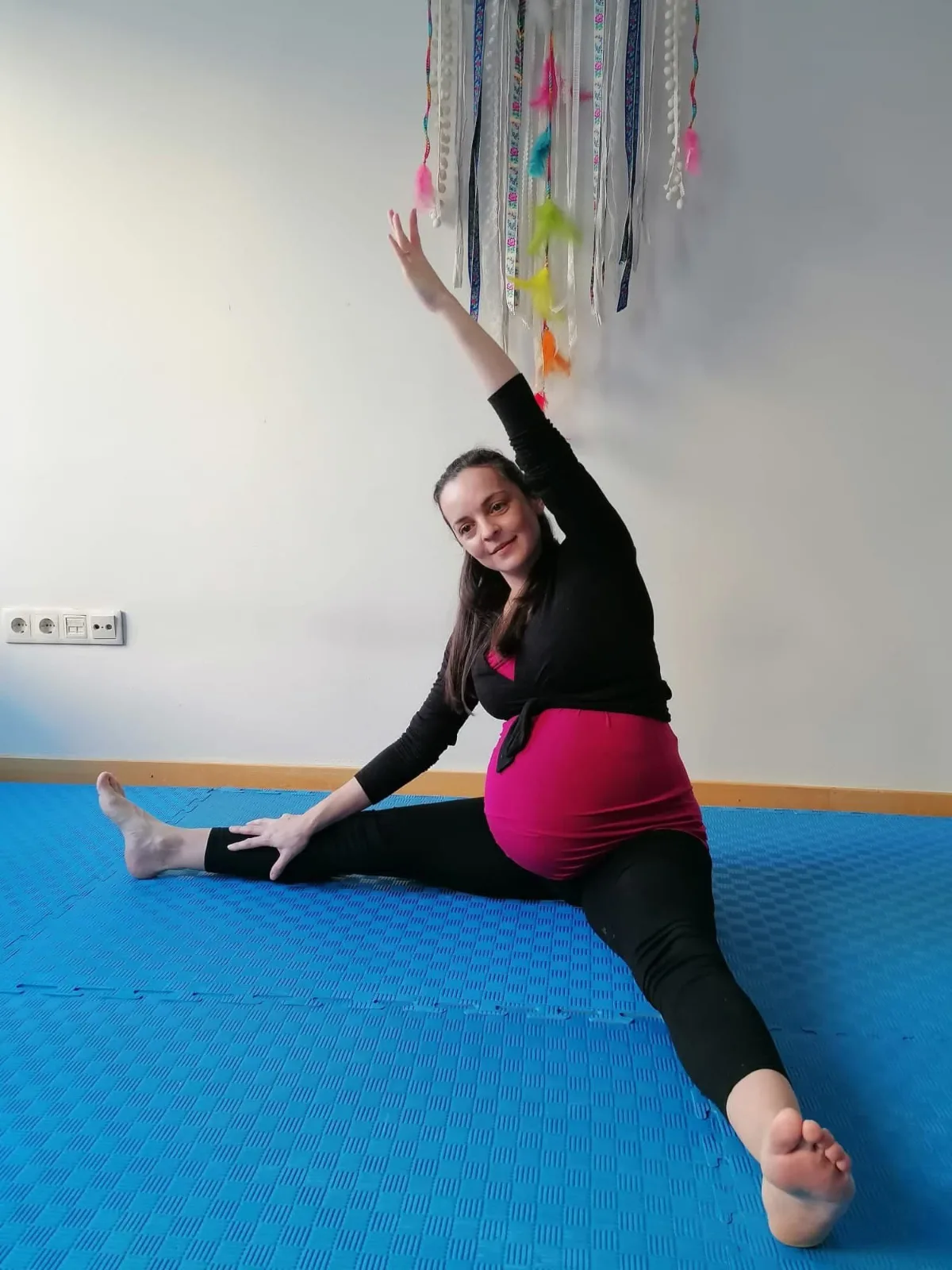
- Vertical arm stretch and spine lengthening
- Slow pelvic rotation (hands on hips)
- Standing, feet slightly apart, gently lengthen the back, using a table top for balance support if needed
Prānāyāma (5 minutes)
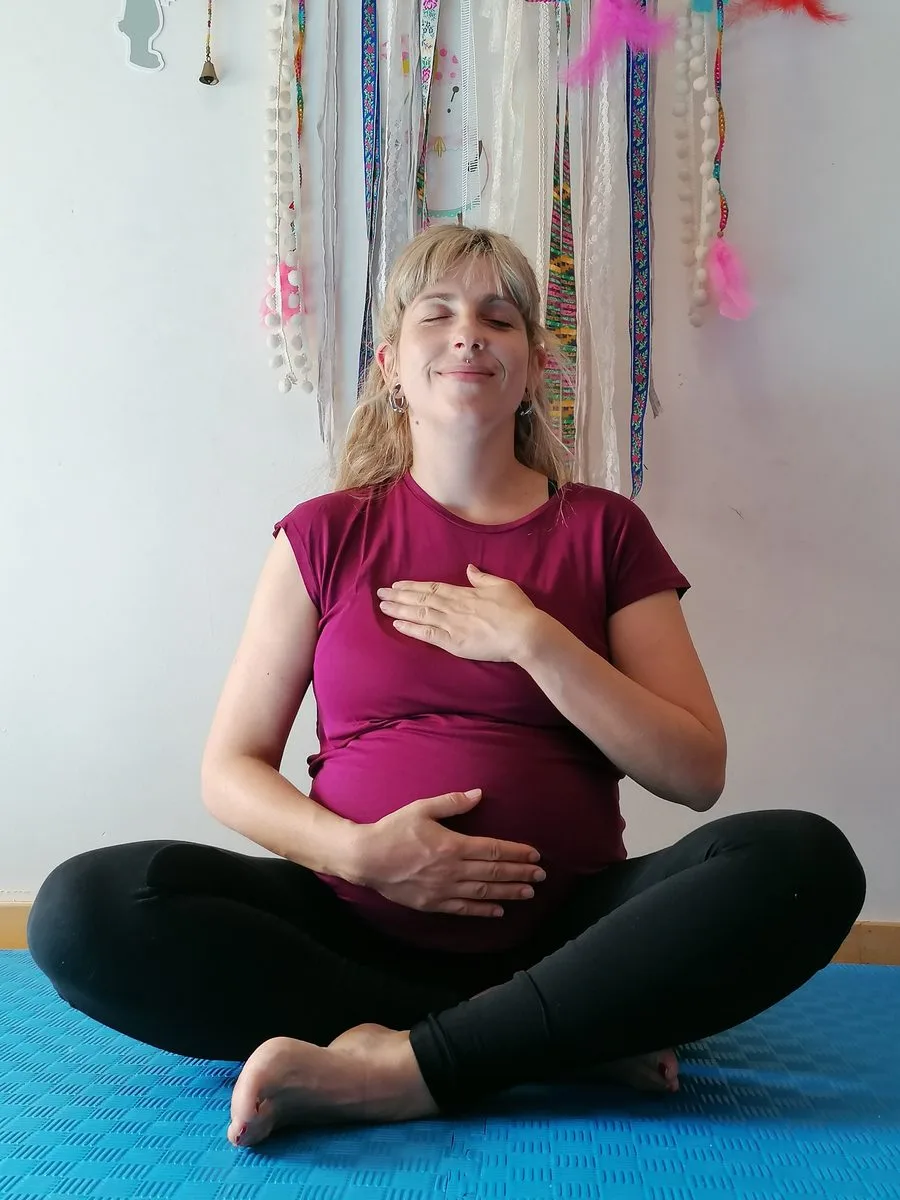
Gentle complete breath
Āsana — Energising Postures & Body Awareness (8 minutes)
- Stretching
- Gentle pelvic opening
- Rotation
Relaxation — Yoganidrā (4 minutes)
- Lying on your left side (preferred)
- Normal breathing
- Progressive relaxation and health visualisation for both of you
Quick Techniques (During Contractions)
Grounding
- Feet firm on the floor
- Feel gravity
- "Ground me"
Sounds & Mantras
- A long "Ahhh" on the exhale
- A low "mmm" (it resonates in the pelvis)
- Don't hold the sound back
Movement
- Gentle pelvic rocking
- Hip circles
- Gentle walking between contractions
Touch
- Massage and encouragement, with eye contact and respect for what the labouring woman needs
- Sacral pressure during a contraction
- Hand-holding (with consent)
Frequently Asked Questions
Can I do yoga right up to the day of birth?
Yes. Many students practise yoga right up until the day they give birth, as long as they feel well and don't have a high-risk pregnancy. Your body knows when to stop — if you're too tired or there's a sign of labour, your body will let you know.
What if I have a high-risk pregnancy?
Talk to your obstetrician first. If they approve, come to a private session so the teacher can assess your specific situation and adapt the practice fully.
Is starting yoga in the 3rd trimester too late?
You can start at any point, as long as you have clinical consent. The focus of the practice changes completely: much less Āsana, much more Prānāyāma and meditation. A private session makes a real difference here.
How many classes per week during postpartum?
One to two classes a week is ideal. One a week is the functional minimum. More than two (unless you were already practising intensively before) may be too much for this phase.
I have postpartum depression. Can yoga help?
Yoga is a genuine complement to therapy and medication — never a replacement. Meditation and Prānāyāma help the nervous system come down from an overactivated state. But the first line of care is always a doctor and a specialised therapist.
Support Lines — Portugal:
- 1º de Maio (Mental Health): 21 839 662
- SNS 24 (National Health Line): 808 24 24 24
- Emergency: 112
- Liga das Mães (Mothers' Support): 21 761 33 34
- SOS Grávida (Pregnancy Helpline): 21 842 44 10
When can I return to advanced Āsanas after giving birth?
A minimum of 12 weeks after a vaginal birth, 16 weeks after a caesarean. And only if you had an established practice before pregnancy — your body has changed and needs time.
Is Pregnancy Yoga for Me?
For pregnant women at any stage of pregnancy, and for women in the postpartum period. We recommend starting from the second trimester — if you were already practising before becoming pregnant, you can continue from the start, with the appropriate adaptations.
Postpartum
After birth, the body needs time. Practices are specially adjusted to each mother's individual condition. We focus the class on recovery of the abdominal and pelvic organs.
Saṅkalpa — positive emotional reinforcement — is also central. This phase is wonderful, but at times also very challenging and isolating.
You can bring your baby and comfortably create a space for your own wellbeing.
You should only resume once you have clinical clearance.
Training
The teachers who work with pregnant and postpartum students are trained in adult yoga with a specialisation in pregnancy yoga, with more than 15 years of experience.
«Practising yoga through both of my pregnancies was an experience with truly positive results. Throughout the whole journey, regular practice was essential to maintaining my mobility and flexibility, bringing an indispensable sense of physical wellbeing. Besides significantly improving the quality of my sleep, yoga taught me to work with my breath and manage my emotions, cultivating a deep sense of calm and a unique connection with my baby.
The extreme care and genuine empathy of Om Rui Pascoal created an environment where I always felt supported and safe, both physically and psychologically. I wholeheartedly recommend this to all mothers-to-be.»