Practice
Yoga for Children & Young People
Yoga for babies, children and young people at Āshram Gaya is a pedagogical practice — intentional, structured, and respectful of each child's development.
Babies — 6 to 12 months
At this stage, the baby discovers the world through the senses, movement, touch, and the emotional bond with the adults closest to them. Classes are attended together with parents or caregivers, in a calm, safe environment that respects each baby's individual rhythm.
The practice includes baby massage — shantala — appropriate sensory stimulation, songs, sounds, gentle movement, and moments of eye contact and affection. We aim to support the integration of early reflexes, body awareness and motor development naturally, without forcing positions, pace or milestones.
Baby yoga can support:
- Emotional bonding and communication between baby and caregiver
- Tactile, visual, auditory and proprioceptive stimulation
- Body awareness and a sense of movement possibilities
- Development of muscle tone, balance and coordination
- Safe exploration of positions, transfers and postural changes
- Relaxation, wellbeing and calmer sleep routines
- Moments of presence, listening and shared trust
More than a class, it's a moment of deep connection between parent and child. Led by Sónia Passos.
Toddlers — 12 months to 2 years
Between their first and second year, children gain motor independence and explore space more actively. It's a phase of intense discovery: walking, running, climbing, going down, carrying, imitating and experimenting.
Classes favour short, simple, repeated activities, with lots of movement, imitation games, music, objects and sensory experiences. We work with basic body and spatial concepts, respecting the attention span and natural need for movement at this age.
Yoga at this stage promotes:
- Concepts like big and small, high and low, in and out, near and far
- Overall motor coordination, balance and spatial orientation
- Exploring different ways of moving: crawling, walking, jumping, spinning and stopping
- Language development through gesture, sound, words and simple stories
- Early moments of waiting, listening and joining in with the group
- Emotional security, independence and joy in movement
Children — 3 to 5 years
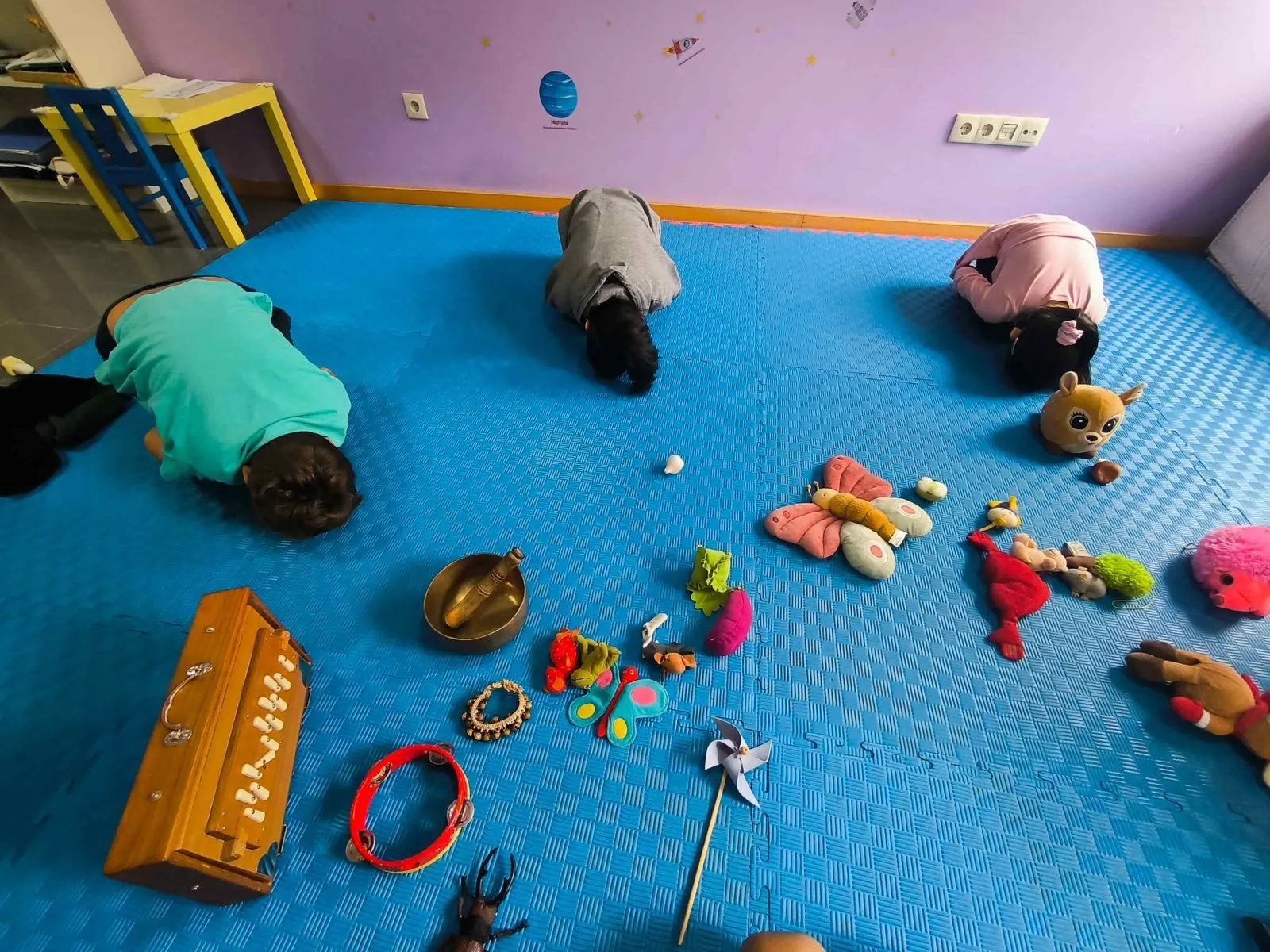
Between three and five, imagination takes centre stage. Children learn through symbolic play, stories, experimentation, and relationships with peers. It's also an important stage for gradually learning to recognise emotions, respect simple rules, and take part in a shared activity.
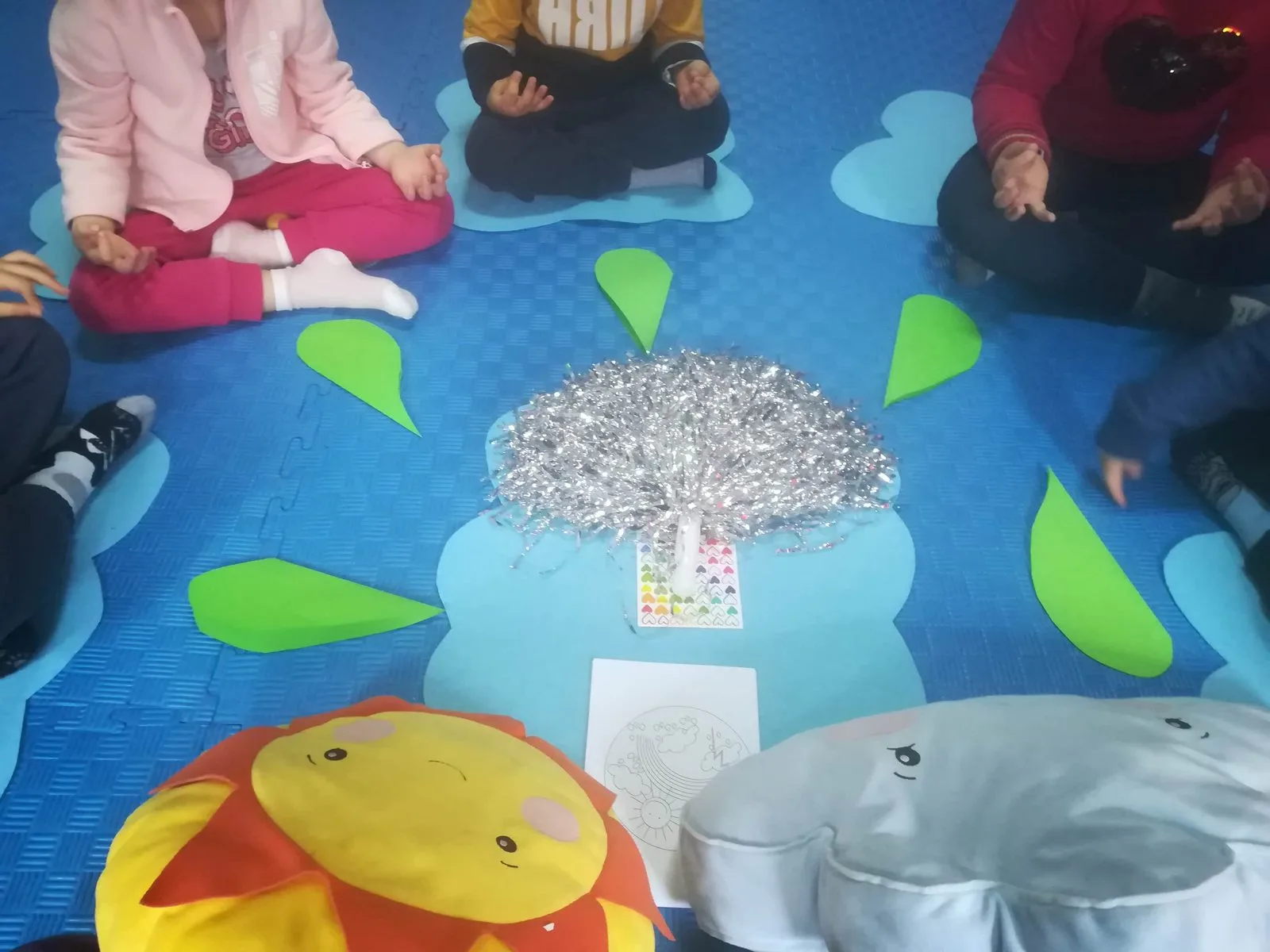
Classes use stories, characters, cooperative games, music, rhythm, nature-inspired postures and creative activities. Every class includes moments of active movement, simple breathing, attention, expression and age-appropriate relaxation.
Yoga can support:
- Development of creativity, imagination and personal expression
- Coordination, balance, laterality and body awareness
- Attention, listening, memory and the ability to follow simple instructions
- Recognising and expressing emotions
- Developing cooperative behaviours, respect and sharing
- A greater capacity to wait, stop, listen and return to the activity
- Independence in routines and confidence in one's own abilities
- Contact with values like caring for oneself, others and nature
Children — 6 to 10 years
At this stage, children develop new cognitive, motor and social skills. They can already follow more elaborate sequences, hold attention for longer, and actively take part in shaping group rules.
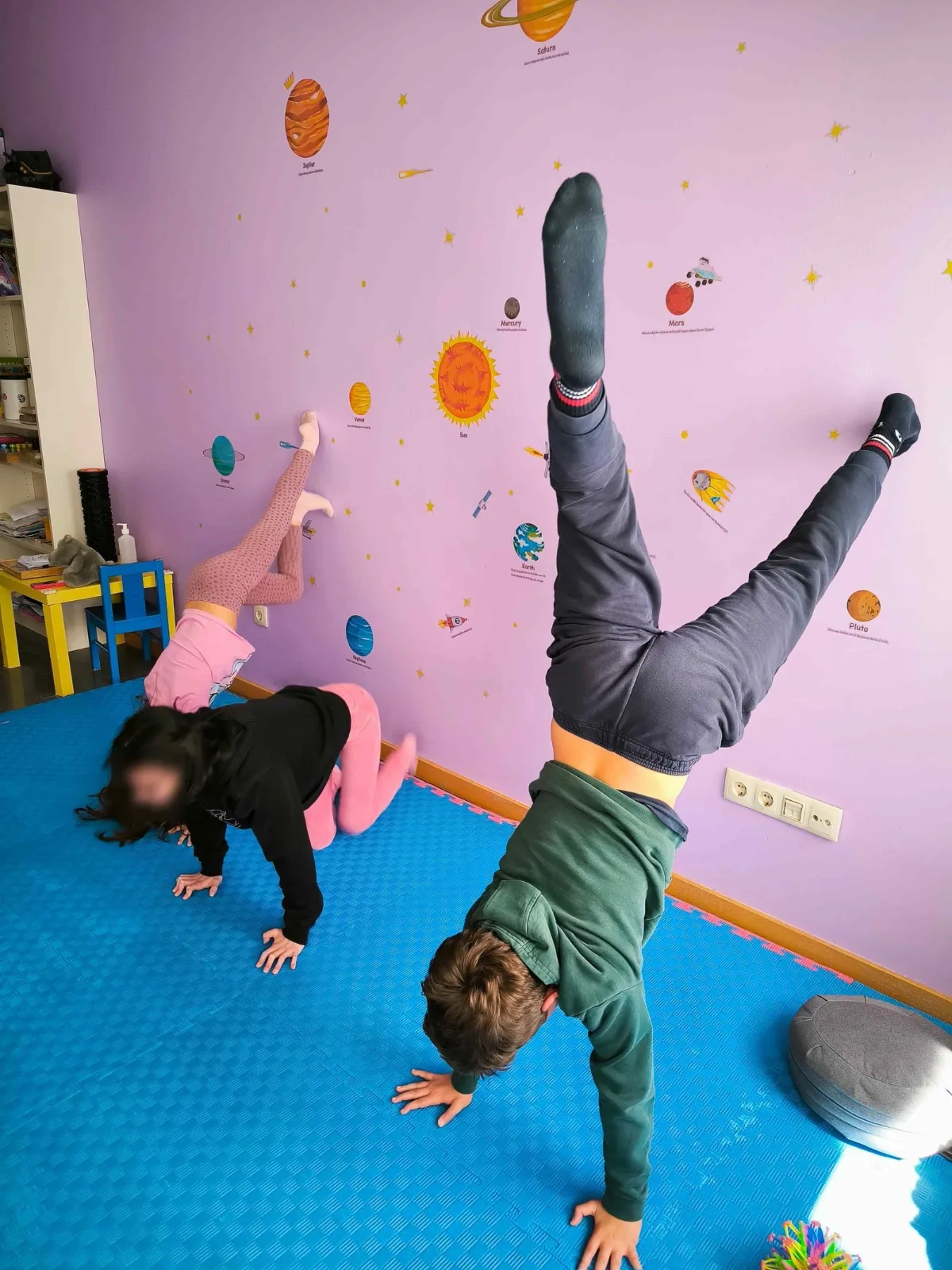
Classes can include sequences of postures, concentration games, breathing exercises, cooperative activities, physical challenges, creative practices and guided relaxation. Content is always adapted to the age, the group and the context in which the practice takes place.
Yoga at this stage promotes:
- Attention, concentration, memory and learning capacity
- Flexibility, balance, strength, coordination and postural awareness
- Body organisation, laterality and spatial orientation
- Creativity, imagination and problem-solving ability
- Self-confidence, persistence and tolerance for frustration
- Emotional self-regulation and simple calming strategies
- More cooperative, respectful peer relationships
- Greater responsibility, independence and awareness of one's own choices
Pre-teens — 10 to 14 years
Preadolescence brings significant physical, hormonal, emotional and social changes. Increased sensitivity, mood swings, questions about body image, school pressure and a need to belong to the group can all surface. Yoga can offer a stable, safe, judgement-free space where each young person can develop tools to know and care for themselves.
The approach becomes more conscious and participatory, combining movement, posture, breathing, concentration, relaxation and reflection. Activities respect the group's maturity and avoid comparisons or inappropriate demands.
The practice can help develop:
- Awareness of bodily changes and a more respectful relationship with the body
- Attention, concentration and organisational skills for school demands
- Practical strategies for coping with stress, anxiety and restlessness
- Recognising and regulating more intense emotions
- Self-esteem, security and personal confidence
- Discipline, perseverance and the ability to build healthy habits
- Respect for personal boundaries and the boundaries of others
- The capacity to pause, rest and recover
Teenagers & Young Adults — from age 14
In adolescence and early adulthood, academic demands, personal decisions, social pressure and the need to build identity and independence all grow. Yoga is offered as an accessible practice to support balance between body, mind and emotions.
Classes include adapted physical practice, breathing techniques, concentration, deep relaxation and moments of reflection. The work can be guided toward concrete everyday concerns — managing anxiety, focus for studying, sleep quality, one's relationship with the body, and preparing for high-pressure moments.
Yoga can support:
- Emotional regulation, reduced tension, and greater stability across studies, work, responsibilities and relationships
- Better quality rest and recovery
- Self-knowledge, self-esteem and decision-making more aligned with one's own values
- Discipline, consistency and independence
- A healthier relationship with the body, self-image and personal limits
- Building simple self-care tools for everyday life
More than a physical practice, it's real support through this transitional phase.
Family Yoga
Family Yoga creates opportunities for presence, sharing and connection between parents, caregivers, children and young people. It's a practice that respects the age, pace and abilities of each participant, with no comparison or performance pressure.
In some settings, parents and children practise in separate groups, allowing work better suited to the development and needs of each age range. In others, they come together in joint classes, where movement, play, breathing, relaxation and cooperation strengthen the family bond.
These experiences can contribute to:
- Creating quality time and shared attention within the family
- Strengthening the emotional bond between adults and children
- Developing more conscious, respectful communication
- Promoting moments of play, creativity and cooperation
- Helping recognise different needs, limits and rhythms
- Bringing simple breathing, pause and relaxation tools into daily life
- Building habits of wellbeing and mutual care
More than a class, Family Yoga is an invitation to be present: to play, listen, breathe and grow together.
Yoga in Schools
We bring yoga into the educational setting as a structured pedagogical tool, with no religious association, focused on the child's overall development.
In our classes we combine a playful approach with a pedagogical one, through themes aligned with the curriculum and the topics teachers are covering. The intention is for yoga to complement classroom learning, reinforcing it through movement, the senses, and conscious presence.
The technical disciplines covered in class:
- Dhāraṇā — concentration and building attention
- Prāṇāyāma — conscious breathing (abdominal and complete)
- Āsana — conscious movement and physical postures (balance, flexibility, laterality)
- Yoganidrā — total relaxation (physical and emotional)
- Kriyā — stimulating and clearing the airways
- Mantra — sound, rhythm, coordination and auditory training
- Pūjā — gratitude and respect for nature (ecological awareness and respect for others)
- Mudrā — hand gestures (fine motor skills and cognitive development)
- Mānasika — thought and positive reinforcement (self-confidence and willpower)
With experience in school settings since 2010, we've developed projects with real impact across several institutions:
- Câmara do Porto / Porto Lazer (2011–2015)
- Colégio Heliantia (2015/2016)
- Escola Jasmim (2016–2022)
- Colégio de Gaia (2016–2018)
- Fundação Couto (2019 – present) — ages 4 months to 2 years, during school hours
- CM Gaia – GAIAprende+: Cooperativa Sol Maior (2016–2024), Abrigo Seguro IPSS (2016–2022), Centro Social de Coimbrões (2022–2025)
A professional, consistent approach adapted to the needs of each school or group.
Teachers: Rui Pascoal (teaching in school settings since 2010) and Sónia Passos (since 2013), both trained specifically in Yoga for Children and Yoga in Schools.
