Practice
Yoga for Emotional Regulation
Anxiety doesn't disappear by ignoring it. Stress doesn't ease by trying to control it with more effort. Yoga has practical tools for working with all of this.
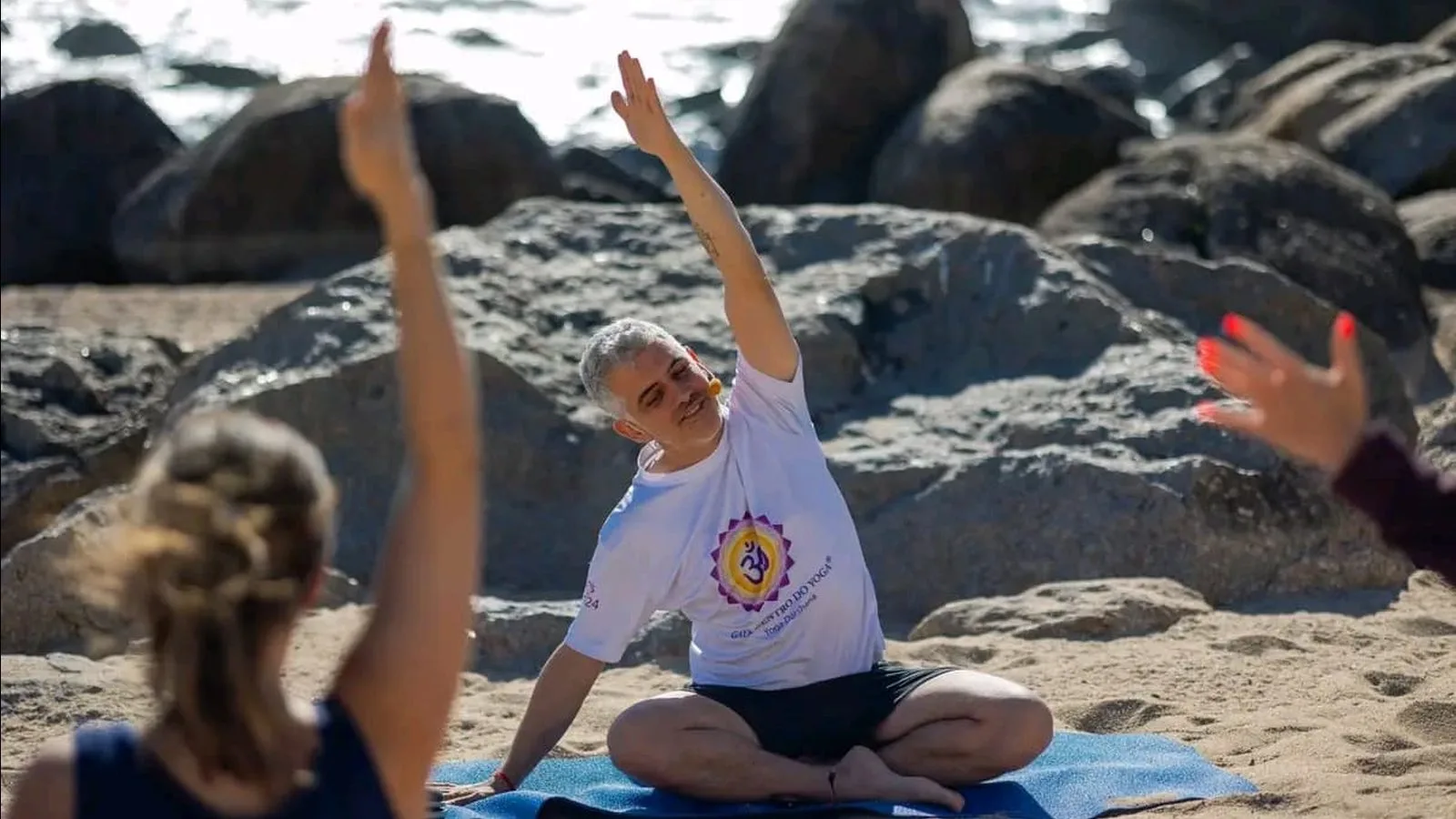
Yoga, Emotional Regulation, Stress and Burnout
Stress is a natural response of body and mind to demanding, challenging or threatening situations. As a one-off response, it can even be useful — but when it goes on without enough time to recover, it can contribute to physical tension, emotional wear, difficulty concentrating, changes in sleep and a sense of losing balance.
Anxiety is an emotional response marked by worry, fear or anticipation of something negative, even when that threat isn't yet present or clearly defined. It can show up as repetitive thoughts, restlessness, faster breathing, bodily tension, difficulty relaxing, or a sense of being constantly on alert.
Anxiety doesn't disappear just because we ignore it. Stress doesn't ease simply because we try to control it with more effort. Often, the greater the inner demand, the greater the sense of tension, urgency or exhaustion becomes.
When anxiety is persistent, intense, or interferes with sleep, studies, work, relationships or daily life, it's important to seek assessment and support from a qualified health professional.
The World Health Organization defines burnout as a syndrome resulting from chronic workplace stress that has not been successfully managed. The WHO identifies three main dimensions:
- Feelings of energy depletion or exhaustion
- Increased mental distance from one's job, or feelings of negativism or cynicism related to one's job
- Reduced professional efficacy
According to the WHO, burnout is classified as an occupational phenomenon, not a medical condition. The definition refers specifically to the professional context and shouldn't be applied automatically to exhaustion arising from other areas of life.
Yoga offers practical tools for building a different relationship with what we feel. It doesn't try to eliminate emotions or demand that we always be calm. Instead, it helps us recognise the body's signals, understand our limits, and develop more conscious ways of responding to daily challenges.
Who It's For
These classes are for teenagers and adults who experience frequent anxiety, accumulated stress, persistent fatigue or difficulty switching off from mental activity. They're also suited to teenagers facing academic, social or family pressure, significant changes, or moments of greater insecurity.
They can be especially useful for anyone who experiences:
- Racing thoughts or constant worry
- Bodily tension, stress-related pain, or difficulty relaxing
- Irritability, impatience, or a sense of always being on alert
- Difficulty concentrating, organising tasks, or making decisions
- Fatigue, low energy, or a sense of exhaustion
- Changes in sleep or difficulty slowing down at the end of the day
- Pressure related to studies, assessments, work or family responsibilities
- Difficulty setting limits or taking breaks
- A need to reconnect with the body
- A sense of losing motivation, clarity or effectiveness
No previous Yoga experience, flexibility or specific physical condition is required. The practice is adapted to each person's possibilities, moment and needs.
What We Work With
Each class is prepared with a clear intention, but adapts to the moment, the energy and the needs of the group. The practice doesn't follow a rigid formula: it can be more dynamic when the need is to release tension and activate the body, or gentler when the goal is to calm, recover and rest.
We work with different dimensions of the human experience:
- Conscious breathing — Prāṇāyāma: simple, progressive breathing practices that help recognise your own rhythm, reduce agitation and support the physiological regulation associated with stress.
- Conscious movement — Āsana: postures and sequences adapted to release accumulated tension, improve body awareness, build stability and restore energy.
- Deep relaxation — Yoganidrā: guided practices of physical and mental rest that support recovery, quality of rest and the capacity to let go of tension.
- Concentration — Dhāraṇā: attention exercises that help train focus, reduce mental scattering and create greater clarity.
- Meditation and self-observation: moments of inner listening that allow us to recognise thoughts, sensations and emotions without being immediately overwhelmed by them.
- Constructive thought — Mānasika: reflection and positive-reinforcement practices aimed at self-confidence, stability and a more balanced relationship with oneself.
- Body awareness: observing areas of tension, breathing patterns, posture and signs of fatigue or overload.
- Conscious pauses: learning simple strategies to interrupt cycles of acceleration and regain presence during the day.
Breathing to Regulate
In moments of stress or anxiety, breathing can become faster, shallower or irregular. In class, we learn to observe this pattern without judgment and to try more conscious ways of breathing.
The breathwork is progressive and respects each practitioner's characteristics. The aim isn't to force the breath, prolong retentions excessively, or reach an ideal state immediately. The goal is to develop a more stable, comfortable and conscious relationship with the act of breathing.
These practices can be used in different situations:
- Before an assessment, presentation or meeting
- During a break from studying or work
- When there's physical tension or mental agitation
- At the end of the day, to ease the transition into rest
- Before making a decision or reacting impulsively
Releasing Tension Through Movement
Stress often shows up in the body as tension in the shoulders, jaw, neck, back, abdomen or legs. Conscious movement allows us to recognise these areas and explore safe ways to mobilise, strengthen and relax.
Āsana practices are adapted to the age, physical condition and energy state of each group. They can include slow movements, stretches, stability postures, sequences coordinated with breath, and moments of pause.
The goal isn't to achieve complex postures or compete. It's to improve the relationship with the body, restore mobility, build stability, and learn to distinguish healthy effort from excessive demand.
Observing Without Being Overwhelmed
Meditation and self-observation don't mean emptying the mind or preventing thoughts from arising. They mean learning to recognise what's happening in the present moment, with more distance and less automatic reaction.
During practice, we can observe:
- Physical sensations
- The rhythm and quality of the breath
- Repetitive thoughts
- Emotions present
- Impulses to act or react
- Needs for rest, movement or support
This process can help create an inner space between experience and response. Over time, it becomes more possible to choose how to act, rather than reacting immediately to fear, pressure, fatigue or irritation.
Yoga and Everyday Life
What's learned in class can stay with a person outside the practice: a short breath before a meeting, a pause before responding impulsively, a few movements after many hours at the computer, or a guided relaxation before sleep.
Simple strategies can also be explored for:
- Organising pauses throughout the day
- Recognising early signs of overload
- Building more consistent sleep and rest routines
- Returning to activities with greater presence and clarity
- Developing a less demanding, more caring relationship with oneself
With continued practice, Yoga can support the development of personal resources for dealing with demanding periods more steadily. The practice doesn't eliminate every challenge, but it can help you respond to them with greater awareness, flexibility and balance.
A Complementary Practice
Yoga can complement medical, psychological or psychotherapeutic care, but it doesn't replace it. In situations of intense anxiety, persistent distress, deep exhaustion, or significant changes in sleep, appetite, behaviour or the ability to carry out daily tasks, it's important to seek support from a qualified health professional.
Classes are oriented towards developing body awareness, breath, attention, relaxation and self-regulation resources. The practice is always adapted responsibly to each person's characteristics and needs.